
The Oath of Epione: A Modern Ethical Tradition for Nursing
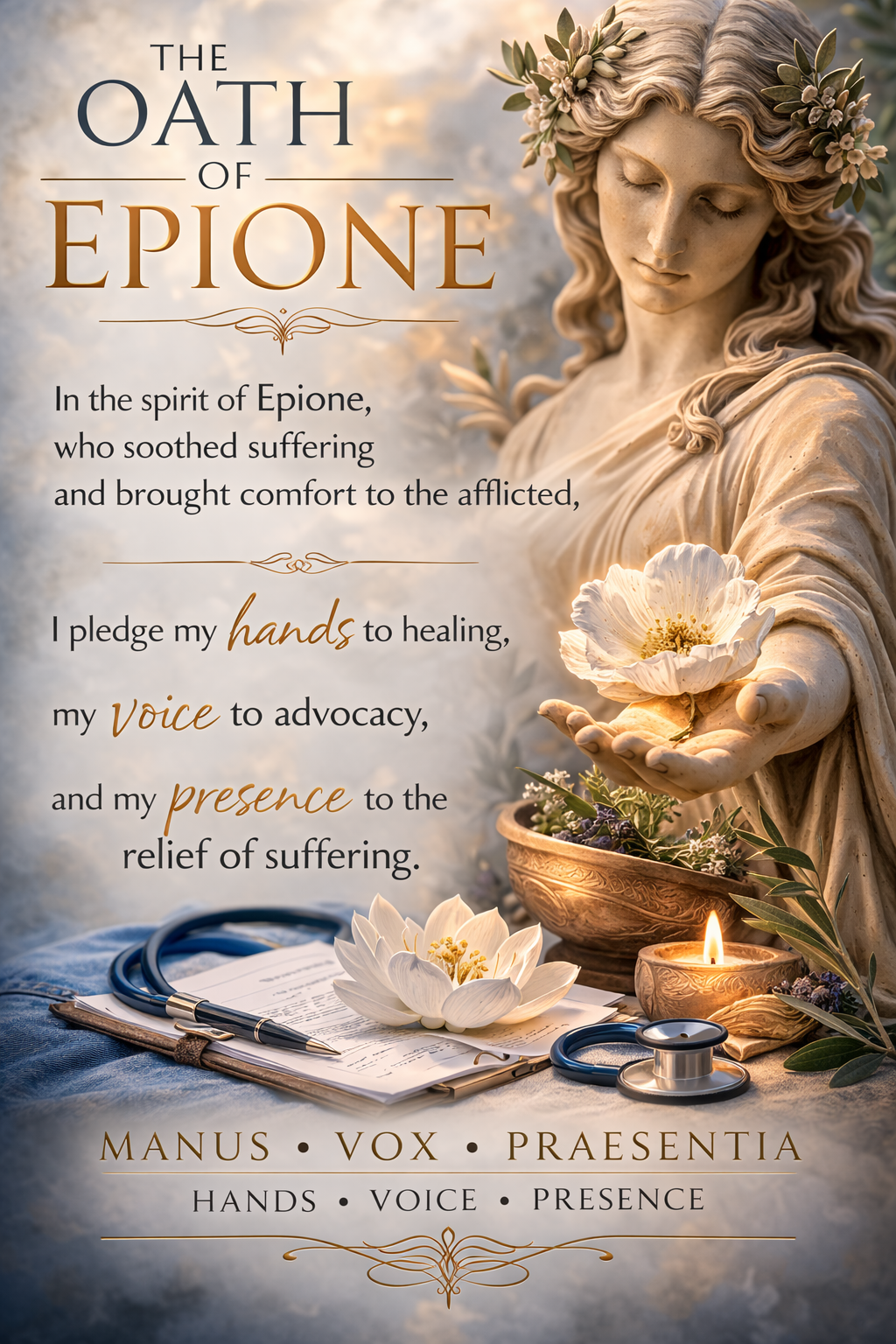
Oath of Epione alongside the Goddess Epione
Why Nursing Needs Its Own Oath
For centuries, physicians have sworn professional oaths rooted in the traditions of Hippocrates.
Nursing, however, has never had a universally recognized oath that reflects its unique ethical foundation.
The Oath of Epione was developed as a symbolic oath rooted in nursing history, ethics, and compassion.
Historical Preamble
For more than two millennia, the ethical tradition of medicine has been symbolically linked to the physician oath attributed to Hippocrates. While this tradition shaped the moral framework of physicians, the equally vital tradition of nursing developed along a different path, one rooted in presence, compassion, and the alleviation of suffering.
In Greek mythology, Epione was the wife of Asclepius, the god of medicine. Her name derives from the Greek word epios, meaning “gentle” or “soothing.” Epione was revered as the goddess who eased pain and comforted the afflicted. Together with Asclepius, she was the mother of several deities representing different dimensions of healing, including Hygieia, associated with health and prevention, and Panacea, associated with cure.
Although Epione symbolized the compassionate relief of suffering, her legacy gradually faded from the symbolic traditions of healthcare. Yet the values she embodied, comfort, presence, and gentle care, closely mirror the enduring ethos of nursing.
The Oath of Epione seeks to restore this symbolic connection by recognizing Epione as a historical and philosophical representation of the healing traditions that emphasize compassion, advocacy, and relational care. It provides a ceremonial ethical framework that reflects the principles guiding modern nursing and advanced practice providers.
The Oath of Epione
In the presence of my teachers, my colleagues, and those I am called to serve,
I pledge myself to the sacred calling of healing and compassionate care.In the spirit of Epione, who soothed suffering and brought comfort to the afflicted,
I pledge my hands to healing, my voice to advocacy, and my presence to the relief of suffering.I will be present with those who suffer, remembering that healing is found not only in science,
but in listening, compassion, and human connection.I will honor the autonomy of those entrusted to my care, respecting their dignity, their voice,
and their right to guide the decisions that shape their lives.I will practice beneficence, striving always to promote health, comfort, and well-being.
I will uphold non-maleficence, remembering that the power to heal requires humility, vigilance,
and the commitment to do no harm.I will pursue justice, providing care without prejudice or discrimination,
and advocating for those whose voices are unheard or whose needs are overlooked.I will remain steadfast in fidelity, honoring the trust placed in me,
keeping confidences, and standing faithfully beside my patients in moments of vulnerability, illness, and recovery.I will respect the wisdom of those who teach me and gladly share knowledge with those who follow,
for learning and mentorship sustain the future of the healing professions.I will work in partnership with all members of the healthcare community,
recognizing that the relief of suffering belongs not to one profession alone
but to all who answer the call to serve.With humility, integrity, and compassion, I dedicate myself to lifelong learning
and faithful service to humanity.If I remain true to this oath,
may I bring comfort to the suffering, strength to the vulnerable,
and honor to the calling of care.This I pledge freely and solemnly,
in service to humanity and in the spirit of Epione.
Oath of Epione (Short Ceremonial Version)
In the presence of my teachers, my colleagues, and those I am called to serve,
I pledge myself to the calling of compassionate care.
In the spirit of Epione, who soothed suffering and brought comfort to the afflicted,
I pledge my hands to healing, my voice to advocacy, and my presence to the relief of suffering.
I will honor the autonomy and dignity of every person entrusted to my care.
I will practice beneficence, striving to promote health and well-being.
I will uphold non-maleficence, remembering that the power to heal requires humility and vigilance.
I will pursue justice, advocating for those whose voices are unheard.
I will remain faithful to the trust placed in me and serve with integrity and compassion.
With humility and lifelong learning, I dedicate my knowledge and skill to the service of humanity.
This I pledge freely and solemnly, in the spirit of Epione.
Ethical Foundations
The oath reflects the core principles of healthcare ethics:
Autonomy: Respecting patient decisions
Beneficence: Promoting well-being
Non-Maleficence: Avoiding harm
Justice: Fairness in care
Fidelity: Honoring the trust between patient and caregiver.
But it also emphasizes uniquely nursing values:
Presence with those who suffer
Advocacy for vulnerable patients
Compassionate Care addressing emotional and social needs
A New Tradition for Nursing Graduations
The Oath of Epione could be incorporated into:
Registered Nurse (RN) Pinning Ceremonies
Nurse Practitioner (NP) and Advanced Practice Registered Nurse (APRN) Graduations
Doctor or Nursing Practice (DNP) or Doctor of Philosophy (PhD) in Nursing Graduations
Just as physicians recite the Hippocratic Oath, nurses could begin their careers by affirming their commitment to relieving suffering.
Why Symbolism Matters
Professional traditions help shape identity.
The Oath of Epione connects modern nursing with a deeper historical narrative. One rooted in compassion, advocacy, and healing.
Call To Action
If you’re a nurse experiencing burnout or stress, compassionate support can help.
📞 Schedule your FREE 15-minute consultation at Desert Willow Behavioral Health.
