
Why Antidepressants Stop Working: Medication Resistance and Depression Treatment Options
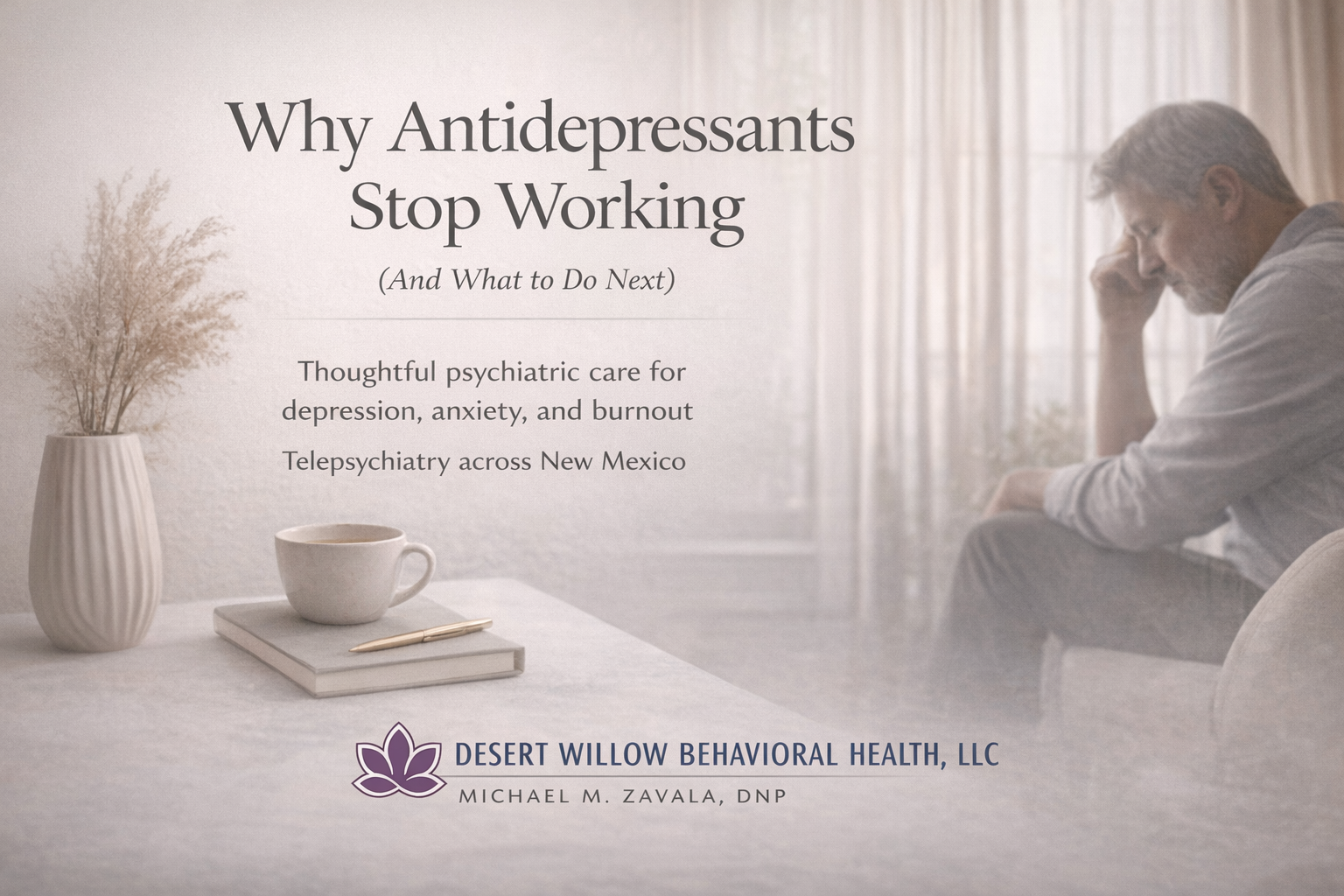
Man with treatment-resistant depression, head on closed hand, deep in thought.
Why Do Antidepressants Stop Working?
Many people start an antidepressant and initially feel relief, only to find that weeks, months, or even years later, their symptoms return. This can feel discouraging and confusing.
If this has happened to you, you are not alone.
This experience is sometimes referred to as “antidepressant tachyphylaxis” or more commonly, treatment-resistant depression. While the term sounds complex, the reality is simple: depression is a dynamic condition, and treatment often needs to evolve over time.
Common Reasons Antidepressants Lose Effectiveness
The Brain Adapts Over Time
Your brain is constantly adjusting to medications. Over time, neurotransmitter systems may adapt, reducing the medication’s effectiveness.
The Underlying Condition Has Changed
Depression is not static. Stress, life changes, medical conditions, or trauma can alter how symptoms present and respond to treatment.
The Dose May No Longer Be Optimal
What worked initially may no longer be the right dose. Some patients require adjustments over time.
Incorrect Diagnosis or Overlapping Conditions
Sometimes depression coexists with:
anxiety disorders
trauma-related conditions
mood disorders
If these are not fully addressed, symptoms may persist.
Medication Limitations
Not all antidepressants work the same for everyone. Finding the right medication often requires careful adjustment and monitoring.
Signs Your Depression Medication May Not Be Working
Symptoms have returned after initial improvement
Persistent low mood or lack of motivation
Ongoing fatigue or poor concentration
Increased anxiety or irritability
Feeling “stuck” despite treatment
If you recognize these signs, it may be time to re-evaluate your treatment plan.
What Are Your Options?
The good news is that there are many evidence-based strategies to improve outcomes.
Medication Adjustments
This may include:
dose optimization
switching medications
combining medications when appropriate
Augmentation Strategies
Adding another medication can enhance effectiveness. Common approaches include:
bupropion
mood stabilizers
atypical antipsychotics
Addressing Contributing Factors
Sleep, stress, medical conditions, and lifestyle factors all influence treatment response.
Coordinated Care
Working with both a therapist and a psychiatric provider often leads to better outcomes.
How Telepsychiatry Can Help
Telepsychiatry allows for:
timely access to care
medication adjustments without long wait times
ongoing monitoring and follow-up
For many patients, this makes it easier to stay engaged in treatment.
When Should You Seek a Psychiatric Evaluation?
Consider seeking specialized care if:
your medication has stopped working
you’ve tried multiple medications without success
your symptoms are interfering with daily life
you feel unsure about your current treatment plan
You don’t have to navigate this alone.
Take the Next Step Toward Feeling Better
At Desert Willow Behavioral Health, I provide thoughtful, individualized psychiatric medication management for depression and anxiety through secure tele-health visits.
If your current treatment is no longer working, a comprehensive evaluation can help identify the next steps.
👉 Schedule your FREE 15-minute telephone consultation today to discuss your goals and explore treatment options.
