
When Professional Burnout Becomes a Mental Health Condition
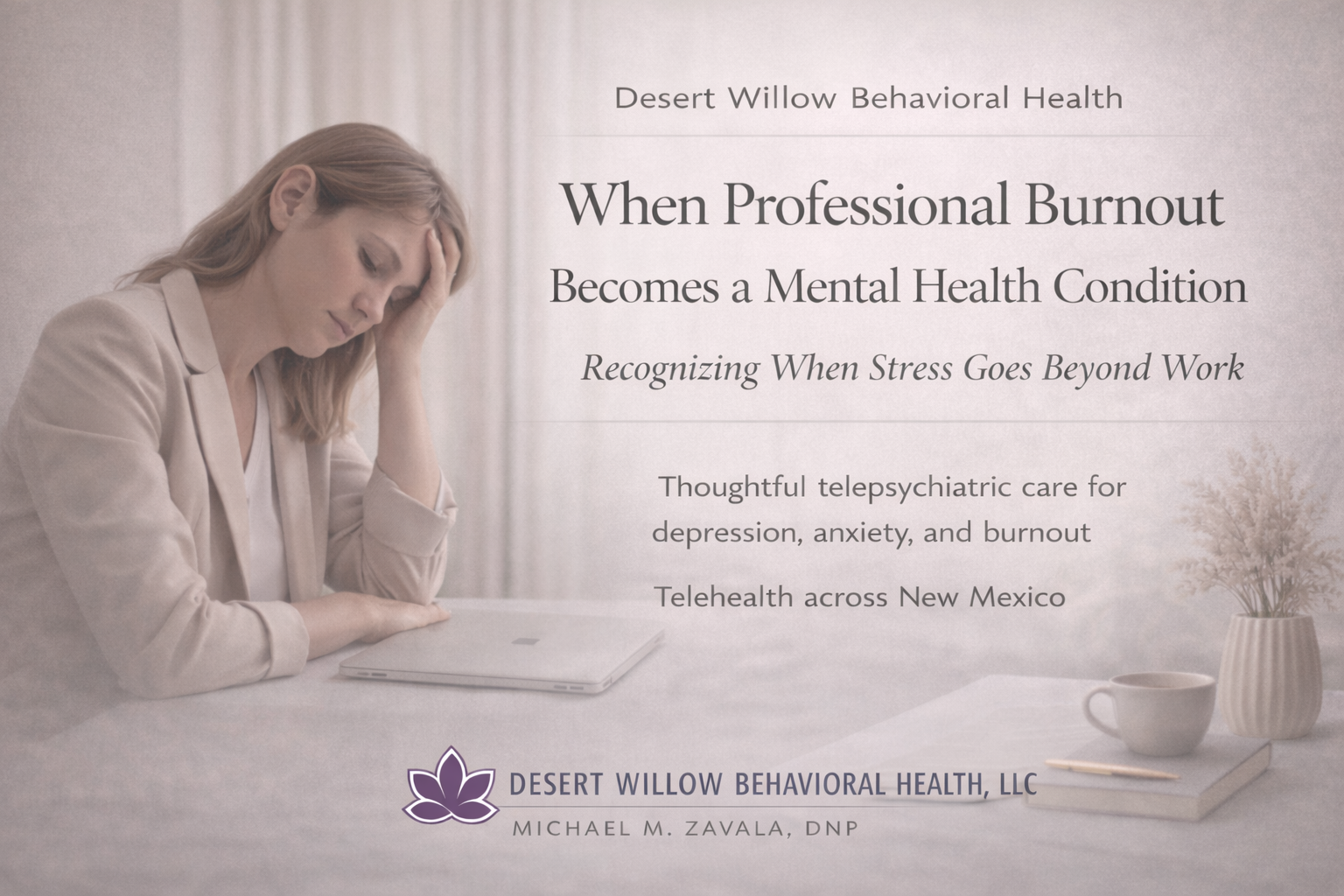
Professional holding her head in her hands, experiencing professional burnout.
Professional burnout has become increasingly common in demanding careers. Healthcare workers, executives, entrepreneurs, educators, and other high-responsibility professionals often experience prolonged stress that gradually erodes emotional and physical resilience.
While burnout is frequently discussed as a workplace issue, there are times when it progresses into a more significant mental health concern.
Understanding when burnout crosses that threshold can help individuals seek the right support.
Understanding Professional Burnout
Burnout is typically the result of chronic workplace stress that remains unresolved over time.
The World Health Organization describes burnout as involving three primary features:
• emotional exhaustion
• increased mental distance from work
• reduced professional effectiveness
Burnout often develops slowly and may initially feel like ordinary work stress.
Warning Signs Burnout May Be Progressing
When burnout becomes more severe, symptoms may begin to resemble clinical mental health conditions.
Signs that burnout may be progressing include:
• persistent fatigue even after rest
• loss of motivation beyond work tasks
• irritability or emotional numbness
• sleep disturbances
• difficulty concentrating
At this stage, symptoms may begin affecting multiple areas of life.
When Burnout Becomes Depression or Anxiety
For some individuals, prolonged stress can eventually trigger clinical conditions such as:
Major depressive disorder
Symptoms may include persistent low mood, loss of interest in activities, and changes in sleep or appetite.
Anxiety disorders
Chronic stress can also lead to ongoing worry, panic symptoms, and difficulty relaxing.
In these cases, burnout is no longer only a workplace issue, it becomes a broader mental health condition requiring evaluation.
Why High-Performing Professionals Often Delay Help
Many professionals continue functioning despite worsening symptoms.
They may believe:
• the stress is temporary
• they simply need a vacation
• pushing through will resolve the problem
Unfortunately, delaying care can sometimes allow symptoms to worsen.
Early recognition often leads to better outcomes.
Treatment Options
When burnout progresses into a mental health condition, treatment may involve several approaches.
These may include:
• stress and workload adjustments
• psychotherapy
• medication management when appropriate
• lifestyle and sleep interventions
A comprehensive evaluation can help determine the most effective treatment plan.
How Telepsychiatry Helps Professionals
Busy professionals often struggle to find time for mental health care.
Telepsychiatry provides flexible access to psychiatric care without travel or long wait times.
Through virtual visits, patients can:
• discuss symptoms and stressors
• review treatment options
• receive ongoing medication management
This approach allows care to fit within demanding schedules.
When to Seek Professional Support
It may be helpful to consult a mental health professional if:
• burnout symptoms persist despite rest
• mood or motivation continue to decline
• stress begins affecting sleep or relationships
• work performance begins to suffer
Addressing symptoms early can help prevent more severe mental health concerns.
Moving Forward
Professional burnout is increasingly common, but it does not need to progress into long-term mental health challenges.
Recognizing the warning signs and seeking support can help individuals regain balance and resilience.
At Desert Willow Behavioral Health, I provide telepsychiatric care for professionals experiencing depression, anxiety, and burnout.
👉 Schedule your FREE 15-minute consultation to discuss your concerns and explore treatment options.
