
Burnout vs Depression: How to Tell the Difference
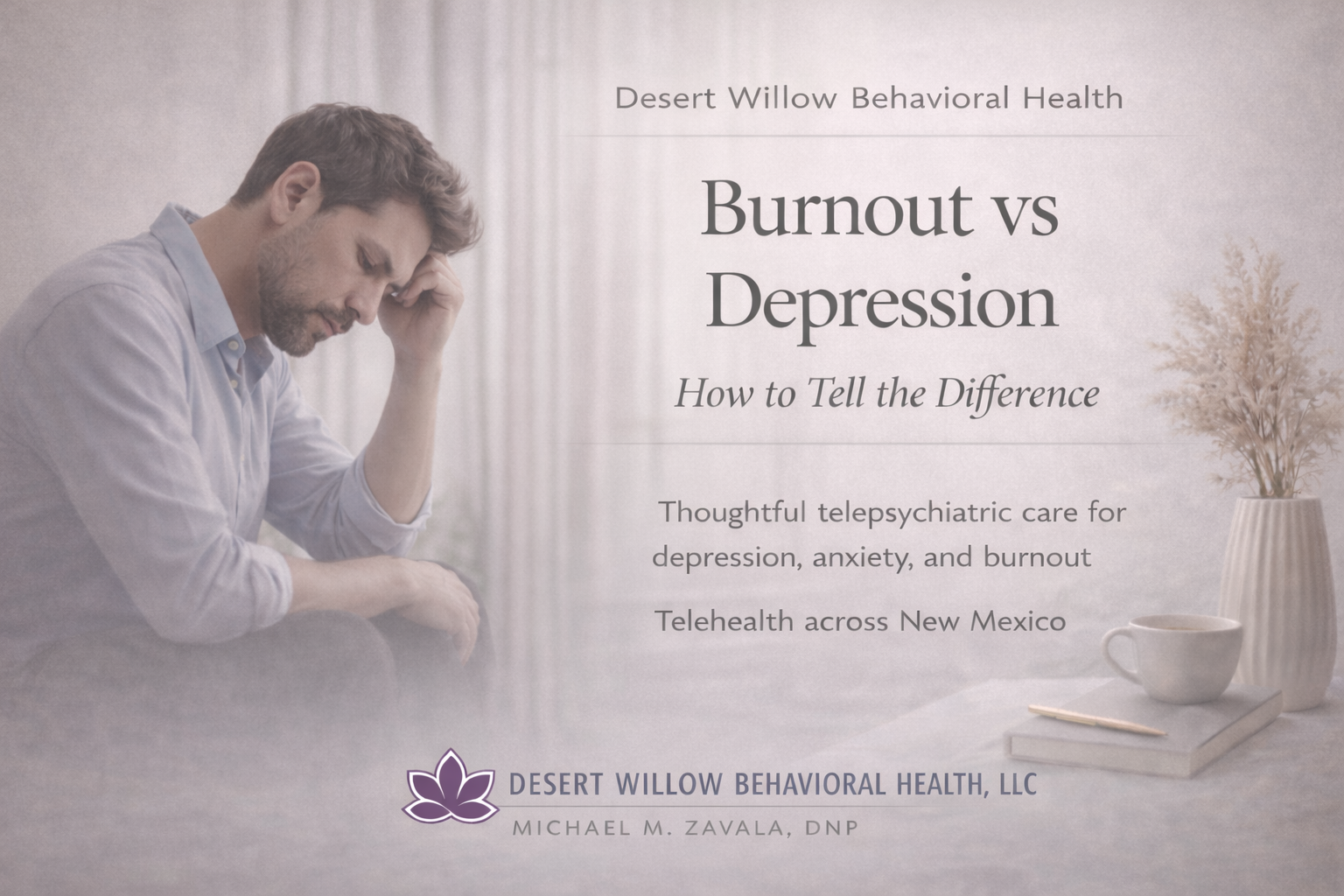
Young professional man experiencing burnout or depression.
Burnout and depression are often confused because they share many overlapping symptoms. Both can lead to fatigue, difficulty concentrating, irritability, and a loss of motivation.
However, burnout and depression are not the same condition. Understanding the difference is important because the treatment approach may vary.
For many professionals, recognizing the difference between burnout and depression is the first step toward finding the right support.
What Is Burnout?
Burnout is a state of chronic workplace stress that has not been successfully managed.
It is commonly seen in high-demand professions such as healthcare, education, law, and leadership roles.
Burnout typically develops gradually and may include:
• emotional exhaustion
• reduced motivation at work
• feelings of detachment from job responsibilities
• decreased professional satisfaction
Burnout is strongly tied to environmental stressors, particularly work-related demands.
What Is Depression?
Depression is a clinical mental health condition that affects mood, energy, sleep, appetite, and overall functioning.
Unlike burnout, depression can affect all areas of life, not just work.
Common symptoms include:
• persistent sadness or low mood
• loss of interest in previously enjoyable activities
• sleep disturbances
• difficulty concentrating
• feelings of hopelessness
Depression can occur with or without workplace stress.
Key Differences Between Burnout and Depression
Burnout
• primarily related to work stress
• symptoms often improve when away from work
• emotional exhaustion is the dominant symptom
Depression
• affects multiple areas of life
• symptoms persist regardless of environment
• includes persistent mood changes
In some cases, burnout can evolve into depression if stress remains unresolved for long periods.
Why Professionals Often Miss the Signs
Many high-performing individuals continue to function despite worsening symptoms.
They may attribute their distress to:
• workload
• responsibility
• temporary stress
This can delay seeking help until symptoms become more severe.
When Burnout Becomes a Mental Health Concern
If burnout begins to affect sleep, mood, relationships, or daily functioning, it may indicate that stress has progressed into a more significant mental health condition.
In these situations, professional evaluation can help clarify the diagnosis and determine appropriate treatment.
Treatment Approaches
Treatment depends on the underlying cause of symptoms.
Burnout may improve with:
• workplace adjustments
• stress management strategies
• improved boundaries and recovery time
Depression often requires:
• psychotherapy
• medication management
• lifestyle interventions
Many individuals benefit from a combination of approaches.
Telepsychiatry for Burnout and Depression
Telepsychiatry allows individuals to access mental health care without disrupting their schedules.
Virtual visits make it easier to:
• assess symptoms
• discuss treatment options
• monitor progress over time
This flexibility is especially helpful for professionals with demanding schedules.
Moving Forward
If you are experiencing persistent fatigue, emotional exhaustion, or mood changes, it may be worth exploring whether burnout or depression is contributing.
At Desert Willow Behavioral Health, I provide thoughtful telepsychiatric care for individuals experiencing depression, anxiety, and burnout.
👉 Schedule your FREE 15-minute telephone consultation today to explore your options.
