
Brain Fog vs Depression: What's the Difference?
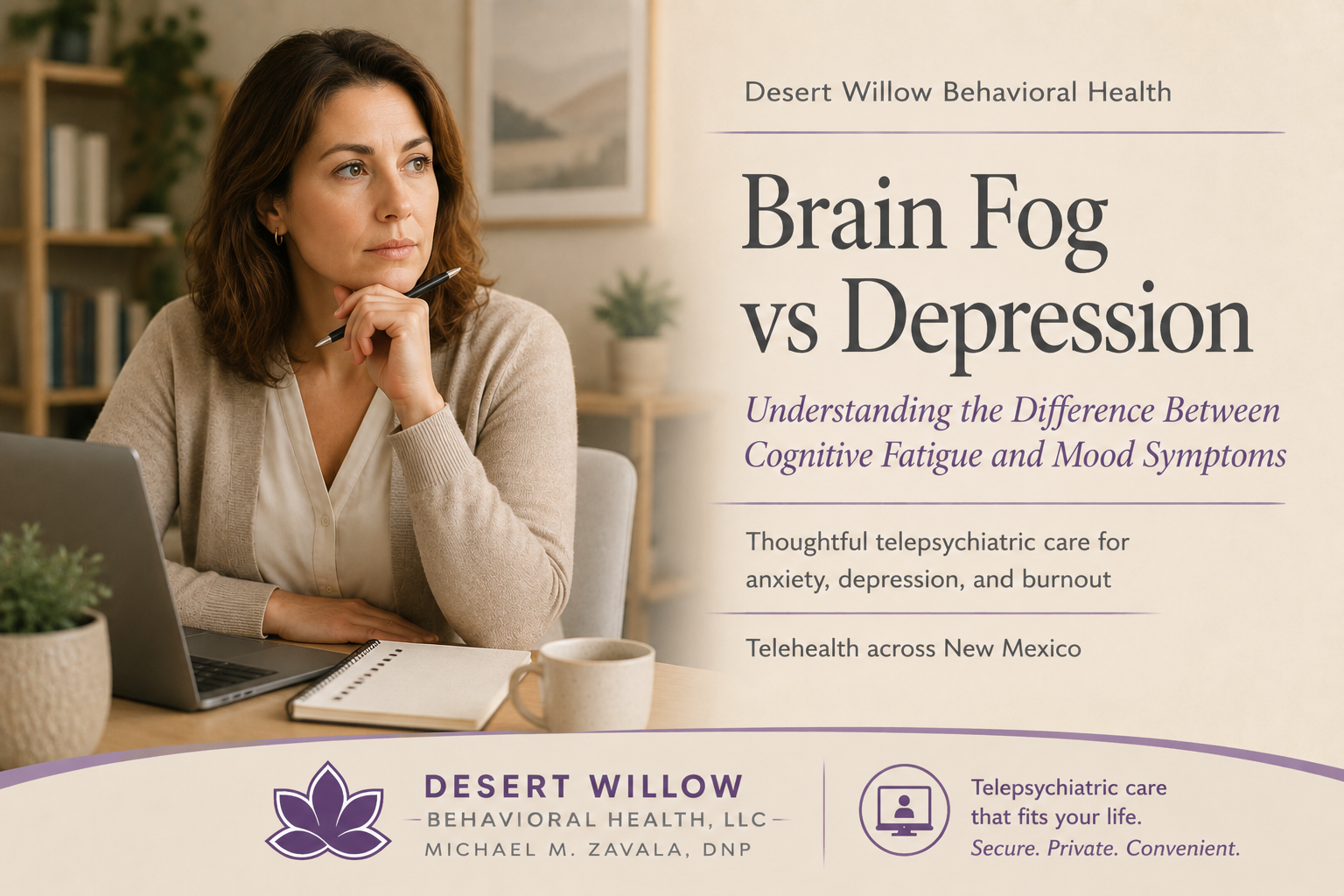
Professional woman sitting pensively working from home
Many people describe feeling mentally "foggy" at some point in their lives.
They may struggle to concentrate, forget details, lose their train of thought, or feel mentally slower than usual.
These symptoms are often referred to as brain fog.
While brain fog is not a formal medical diagnosis, it can be a frustrating symptom that affects work performance, relationships, and overall quality of life.
One challenge is that brain fog and depression can sometimes look very similar.
Understanding the difference can help determine the most appropriate treatment approach.
What Is Brain Fog?
Brain fog is a term commonly used to describe difficulties with:
• concentration
• attention
• memory
• mental clarity
• processing information
Individuals often describe feeling:
• mentally sluggish
• forgetful
• easily distracted
• less productive than usual
Brain fog can occur for many reasons, including stress, poor sleep, medical conditions, medication side effects, and mental health concerns.
What Does Depression Feel Like?
Depression affects much more than mood.
While sadness is often associated with depression, many individuals experience symptoms such as:
• low energy
• loss of motivation
• difficulty concentrating
• memory problems
• reduced interest in activities
In fact, cognitive symptoms are often among the most frustrating aspects of depression.
Many patients report feeling as though they "can't think clearly" or are not functioning at their usual level.
Similarities Between Brain Fog and Depression
Both conditions may cause:
• difficulty concentrating
• forgetfulness
• mental fatigue
• reduced productivity
• slower thinking
Because these symptoms overlap, it can be difficult to determine the underlying cause without a comprehensive evaluation.
Signs Your Symptoms May Be Related to Depression
Brain fog may be related to depression when it occurs alongside:
• persistent low mood
• loss of interest in enjoyable activities
• feelings of hopelessness
• changes in sleep or appetite
• ongoing fatigue
When these symptoms are present, depression may be contributing to cognitive difficulties.
Stress, Burnout, and Cognitive Function
Chronic stress and professional burnout can also affect brain function.
Many individuals experiencing burnout notice:
• difficulty focusing
• memory lapses
• reduced mental efficiency
• increased mental fatigue
This is one reason burnout, anxiety, and depression are often interconnected.
When Should You Seek Professional Help?
It may be helpful to seek evaluation if:
• concentration problems persist
• memory difficulties worsen
• symptoms interfere with work performance
• mood symptoms are present
• burnout is affecting daily functioning
A comprehensive assessment can help identify whether symptoms are related to stress, anxiety, depression, sleep problems, or another underlying concern.
How Telepsychiatry Can Help
Telepsychiatry allows individuals to discuss cognitive and emotional symptoms through secure virtual appointments.
Treatment may include:
• evaluation of mood symptoms
• medication management
• burnout assessment
• treatment recommendations
Understanding the underlying cause is often the first step toward improvement.
Serving Patients Across New Mexico
Desert Willow Behavioral Health provides telepsychiatric care for adults throughout New Mexico, including:
• Albuquerque
• Santa Fe
• Las Cruces
• Rio Rancho
• Farmington
• Roswell
• Hobbs
Secure virtual appointments are available throughout the state.
Moving Forward
Brain fog can be frustrating and concerning, especially when it begins affecting work performance, productivity, or daily life.
Sometimes these symptoms are related to stress or burnout. Other times, depression or anxiety may be contributing.
At Desert Willow Behavioral Health, I provide thoughtful telepsychiatric care for individuals experiencing anxiety, depression, burnout, and cognitive concerns.
👉 Schedule your FREE 15-minute consultation today to explore your treatment options.
Related Articles
• Burnout vs Depression: How to Tell the Difference
• Why Your Primary Care Antidepressant May Not Be Enough
• When Anxiety Medication Stops Working
• What Is Treatment-Resistant Depression?
